posted by kathz
Online life is still life, as I’ve been reminded by a blogpost from Rhiannon Grant.
I’ve been using the internet for a long while and I’m in a very happy relationship which started online. Other people are much less experienced with the internet and are trying to get used to the different conventions and kinds of contact it offers. Rhiannon’s blogpost, which can be reached by clicking here, offers some helpful advice.
This doesn’t mean we should expect everyone to use the internet. There are still people who have good reasons to stay away from online experiences as well as others for whom it’s impossible. We still need to value the experience and insights of those who stay away from the virtual world. If we care about equality, we need to remember that the most valuable insights we can gain will often come from those who don’t share our experience or perspectives. These are the insights that can help us learn.
We can also help one another by talking about the aspects of online Meeting for Worship and other online encounters that are difficult. For example, I don’t like the idea of everyone else staring at me in my home. This may say something about my working-class origins - I’ve always felt uncomfortable about the way middle-class people spend so much time discussing their own and other people’s home decor. I’m also lousy at housework. Other people may have other concerns - about how they look or sound or about the difficulty of socialising in a large group when Meeting has ended.
If we’re concerned about equality and building a community in which everyone is valued and loved, we need to be attentive to one another’s concerns and thoughtful about how we respond. It’s not easy to express a lack of confidence when others seem secure. And it’s worth remembering that equality is very hard to practise in a world where inequality is taken for granted.
Showing posts with label Quaker. Show all posts
Showing posts with label Quaker. Show all posts
Sunday, 3 May 2020


Thursday, 16 April 2020
Helplessness
posted by kathz
I'm used to being a helper. I'm used to doing things for other people. And suddenly the best I can do for others is nothing at all - or what seems like nothing at all. At the same time lots of people - often people whose work has been barely noticed - are doing a great deal to help people like me. They are the shelf-stackers, the shop assistants, the cleaners, the transport workers, the people who make deliveries and so many others as well as the porters, pharmacists, care workers, nurses, doctors and others within the health and social care sectors. Members of the armed forces - now working to build hospitals that may save lives - are doing more than I am. I'm mostly staying home.
At home I have enough to eat. I can cope with the lack of flour or tinned tomatoes. I'm warm. I'm safe. Others are going without food, have no home or are in places that are not safe. I am privileged.
I am privileged without the power to help anyone or to change the world.
As a Quaker and as a human being I care about equality. At the moment Quakers in Britain are considering questions of privilege and inclusion and it is an uncomfortable process. No-one likes to be reminded that they are more privileged than others - and people who are less privileged often find it painful to talk about their experiences of exclusion. Some people will argue that privilege is allied to power and that power can be used to achieve change for good. They can point to cases where this has happened.
The effects of the Covid-19 virus remind me how profoundly unequal society is in Britain and in the wider world. My privilege is not earned. It is a matter of luck - and it isn't accompanied by power.
Some of the people doing vital work at the moment may be among those who lack a safe place to live. They may be dependent on food banks. At the same time they are risking their lives for people like me.
Helplessness is hard to live with. How much more pleasant it is to help people than to receive help. But if I'm able to to offer help again, I hope I remember this experience of helplessness. I may find I know a little more about how those needing help feel. I must remember that those needing help may be among those who worked to save lives or make other people's lives bearable.
As Quakers, we look for that of God in everyone. We need to see what we can learn from the words and experience of others, whether or not they are Quakers. We don't own the whole truth - we are seekers. And we don't practise equality yet thought we value it - we're just trying to get there. Helplessness may turn out to help me on the way.
I'm used to being a helper. I'm used to doing things for other people. And suddenly the best I can do for others is nothing at all - or what seems like nothing at all. At the same time lots of people - often people whose work has been barely noticed - are doing a great deal to help people like me. They are the shelf-stackers, the shop assistants, the cleaners, the transport workers, the people who make deliveries and so many others as well as the porters, pharmacists, care workers, nurses, doctors and others within the health and social care sectors. Members of the armed forces - now working to build hospitals that may save lives - are doing more than I am. I'm mostly staying home.
At home I have enough to eat. I can cope with the lack of flour or tinned tomatoes. I'm warm. I'm safe. Others are going without food, have no home or are in places that are not safe. I am privileged.
I am privileged without the power to help anyone or to change the world.
As a Quaker and as a human being I care about equality. At the moment Quakers in Britain are considering questions of privilege and inclusion and it is an uncomfortable process. No-one likes to be reminded that they are more privileged than others - and people who are less privileged often find it painful to talk about their experiences of exclusion. Some people will argue that privilege is allied to power and that power can be used to achieve change for good. They can point to cases where this has happened.
The effects of the Covid-19 virus remind me how profoundly unequal society is in Britain and in the wider world. My privilege is not earned. It is a matter of luck - and it isn't accompanied by power.
Some of the people doing vital work at the moment may be among those who lack a safe place to live. They may be dependent on food banks. At the same time they are risking their lives for people like me.
Helplessness is hard to live with. How much more pleasant it is to help people than to receive help. But if I'm able to to offer help again, I hope I remember this experience of helplessness. I may find I know a little more about how those needing help feel. I must remember that those needing help may be among those who worked to save lives or make other people's lives bearable.
As Quakers, we look for that of God in everyone. We need to see what we can learn from the words and experience of others, whether or not they are Quakers. We don't own the whole truth - we are seekers. And we don't practise equality yet thought we value it - we're just trying to get there. Helplessness may turn out to help me on the way.
Saturday, 11 April 2020
Locked down Quakers
posted by Kathy
There was a time, back in the seventeenth century, when it was not unusual for Quakers to be locked up - usually for disturbing the peace, for worshiping in a different way, or for refusing to pay tithes (subscriptions to the Church of England). British Quakers have been locked up since then, most recently for protests against the arms fair or for involvement in Extinction Rebellion. But now we're all under lockdown and what Quakers experience is part of a general imprisonment which we try to endure for the sake of the greater good.
Conditions of our locked down lives vary. Some are in the highly vulnerable category, so unable to leave their homes at all. Others make the most of their daily walk or bike ride for exercise. Some struggle with mental or physical ill health. Some live in crowded conditions or lack a secure place to call home. Some endure difficult or abusive relationships. Some don't have enough money for food, for electricity - let alone for some of the small pleasures (books, games, etc) that make life feel worth living.
It's important to realise how various our experiences of life under lockdown can be - and how reluctant some of us (even some Quakers) may feel to share the difficulties they are experiencing. That's a sad thing for those of us in more fortunate circumstances because we urgently need to learn from the experiences of others.
Meanwhile Beeston Quakers continue. In the years since I last wrote, Beeston Quakers has grown and, until lockdown, Meetings for Worship averaged around fifteen attending every week - not the same fifteen every week and there are probably between thirty and forty people associated with the Meeting.
But in lockdown we're unable to meet in person. Instead, those of us who are happy to do so gather online and hold Meeting for Worship online via Zoom. That's right - pause for laughter - we actually share silence online! And our Meetings have been mostly silence although there's time and space for chat before and afterwards.
This change in approach has made me think more about what we're doing in our Meetings for Worship and the difference between a Meeting and individual meditation. I don't think the online experience is vital - I know that some Friends choose instead to sit in a quiet place (even a garden if they have one) and experience a sense of connection with others at the usual time for Meeting for Worship. Some Friends don't have the technology to go online or find it unhelpful - having a computer, phone or smartphone has never been a prerequisite for Quaker worship. But I use my netbook and headphones because I like to see the faces of others and know who is worshiping with me - and because I'm lucky enough to have this equipment. Others connect on phones.
So what exactly am I doing? I can't speak for others but I think that what I''m trying to reach is a place of deep listening. Quakers used to say they were listening for God's guidance but that's a tricky phrase - whatever God is or may be has become caught up in the limitations of human imagination and what I'm talking about is something much harder to define. Words like "Spirit" or "Light" may be better but I'm really talking about an experience that has always resisted being put into words - or into my words anyway.
I don't just sit down and let this listening happen. I let myself be aware of other people, I notice odd details around me, I let worries and concerns surface and then, very gradually, I find myself slipping into to the deep place of listening. I don't always know I'm doing it. Sometimes it's only when I surface at the end of Meeting that I realise things around me have made a slight rearrangement and I've adjusted my relationship with the world.
Occasionally in Meeting someone is moved to speak. This may be by speaking - and that's not aways clear with my dodgy broadband connection - or they may type into the chat area. I take what I can from this, recognising that what doesn't work for me may, in Quaker-speak, speak to someone else's condition. Or I may be filled with an overpowering urge to say something or read something - often something that arrives quite suddenly in Meeting and that wasn't on my mind before. When that happens, I speak as clearly and briefly as I can - but I may let the words order themselves in my mind before I begin so that it's clear to others. When the words order themselves, I find myself stripping out the inessentials.
Of course, online Meeting has its technical problems - microphones that need to be muted, video connections that fail. And it can be hard to find a quiet space. But some people will also worship with cats, dogs and small children around them, or may choose to join a Meeting just for the few minutes or half hour they have.
Online Meetings for Worship are taking place all around the country and elsewhere. They may include friends abroad and people whose disabilities have previously prevented them from reaching a Meeting. It's not the same as attending a Meeting in the same physical space as other people - but it's not as different as I feared it might be.
There was a time, back in the seventeenth century, when it was not unusual for Quakers to be locked up - usually for disturbing the peace, for worshiping in a different way, or for refusing to pay tithes (subscriptions to the Church of England). British Quakers have been locked up since then, most recently for protests against the arms fair or for involvement in Extinction Rebellion. But now we're all under lockdown and what Quakers experience is part of a general imprisonment which we try to endure for the sake of the greater good.
Conditions of our locked down lives vary. Some are in the highly vulnerable category, so unable to leave their homes at all. Others make the most of their daily walk or bike ride for exercise. Some struggle with mental or physical ill health. Some live in crowded conditions or lack a secure place to call home. Some endure difficult or abusive relationships. Some don't have enough money for food, for electricity - let alone for some of the small pleasures (books, games, etc) that make life feel worth living.
It's important to realise how various our experiences of life under lockdown can be - and how reluctant some of us (even some Quakers) may feel to share the difficulties they are experiencing. That's a sad thing for those of us in more fortunate circumstances because we urgently need to learn from the experiences of others.
Meanwhile Beeston Quakers continue. In the years since I last wrote, Beeston Quakers has grown and, until lockdown, Meetings for Worship averaged around fifteen attending every week - not the same fifteen every week and there are probably between thirty and forty people associated with the Meeting.
But in lockdown we're unable to meet in person. Instead, those of us who are happy to do so gather online and hold Meeting for Worship online via Zoom. That's right - pause for laughter - we actually share silence online! And our Meetings have been mostly silence although there's time and space for chat before and afterwards.
This change in approach has made me think more about what we're doing in our Meetings for Worship and the difference between a Meeting and individual meditation. I don't think the online experience is vital - I know that some Friends choose instead to sit in a quiet place (even a garden if they have one) and experience a sense of connection with others at the usual time for Meeting for Worship. Some Friends don't have the technology to go online or find it unhelpful - having a computer, phone or smartphone has never been a prerequisite for Quaker worship. But I use my netbook and headphones because I like to see the faces of others and know who is worshiping with me - and because I'm lucky enough to have this equipment. Others connect on phones.
So what exactly am I doing? I can't speak for others but I think that what I''m trying to reach is a place of deep listening. Quakers used to say they were listening for God's guidance but that's a tricky phrase - whatever God is or may be has become caught up in the limitations of human imagination and what I'm talking about is something much harder to define. Words like "Spirit" or "Light" may be better but I'm really talking about an experience that has always resisted being put into words - or into my words anyway.
I don't just sit down and let this listening happen. I let myself be aware of other people, I notice odd details around me, I let worries and concerns surface and then, very gradually, I find myself slipping into to the deep place of listening. I don't always know I'm doing it. Sometimes it's only when I surface at the end of Meeting that I realise things around me have made a slight rearrangement and I've adjusted my relationship with the world.
Occasionally in Meeting someone is moved to speak. This may be by speaking - and that's not aways clear with my dodgy broadband connection - or they may type into the chat area. I take what I can from this, recognising that what doesn't work for me may, in Quaker-speak, speak to someone else's condition. Or I may be filled with an overpowering urge to say something or read something - often something that arrives quite suddenly in Meeting and that wasn't on my mind before. When that happens, I speak as clearly and briefly as I can - but I may let the words order themselves in my mind before I begin so that it's clear to others. When the words order themselves, I find myself stripping out the inessentials.
Of course, online Meeting has its technical problems - microphones that need to be muted, video connections that fail. And it can be hard to find a quiet space. But some people will also worship with cats, dogs and small children around them, or may choose to join a Meeting just for the few minutes or half hour they have.
Online Meetings for Worship are taking place all around the country and elsewhere. They may include friends abroad and people whose disabilities have previously prevented them from reaching a Meeting. It's not the same as attending a Meeting in the same physical space as other people - but it's not as different as I feared it might be.
Thursday, 29 July 2010
Meeting in August - and afterwards
posted by kathy
For many years, Beeston Quakers haven't met together in August. This started because it was hard to organise when many members had young families and it gave the small core of Beeston Quakers, who took responsibility for the Meeting week after week, a chance to enjoy other weekend activities and to attend other Meetings.
The people involved with any Meeting change over the years and so do their needs and commitments. This August we're experimenting. There will be a Sunday Meeting for Worship on the first three Sundays in August (the 1st, 8th and 15th) at 10.30 a.m. (but not on the last two Sundays). Visitors are, as always, welcome.
Meanwhile there's a danger that the Day Centre (properly the Middle Street Resource Centre) where we meet will be closed in the current round of County Council cuts. This won't be a disaster for Beeston Quakers who can move to another building or attend other Meetings. However it presents a serious problem for the people who use the Centre in the week - and they're busy campaigning against it.
 The Middle Street Resource Centre is used by people with mental health difficulties - and, judging from what we see at Meeting on Sundays, it's well used. In the time we've been meeting there - 18 years, I think - we've seen the centre grow from a functional institution to a place that is loved and cared for by its users. We've seen and enjoyed the wonderful gardens that have been planted. We've read the notices on the walls and seen the signs of a supportive social life in which the people who come to the centre help and teach one another. We've seen that people do art and creative writing, go on outings together, learn a huge range of subjects. It's a place which people value - and where they feel valued. The centre is a living witness to what we as Quakers recognise as "that of God in every one" - though the users of the centre would probably have different language to describe it. The centre as it is now doesn't feel like a place of difficulty and illness but a place of healing and health.
Visiting the centre on Sundays, we've read the notices and information about mental health on the walls and tables and have become much better informed. Some of us have talked about our own experiences. 1 in 4 of the population have mental health difficulties at some point in their lives - the centre helps people with the kind of problems that everyone encounters in themselves, their families or friends. I've never seen a centre set up to help people that so evidently does a good job.
The county council is proposing to give centre users an individual account so that they can still get help. But this would deprive the users of the support they have now and the network of friendships they have built up. The centre is a sociable place. It feels loved.
The users are campaigning to keep the centre which means so much to them - and to which they have given such care. Readers of this blog may wish to sign their petition. There's a copy in the Oxfam shop on Beeston High Road and you can also sign it on-line, HERE.
For many years, Beeston Quakers haven't met together in August. This started because it was hard to organise when many members had young families and it gave the small core of Beeston Quakers, who took responsibility for the Meeting week after week, a chance to enjoy other weekend activities and to attend other Meetings.
The people involved with any Meeting change over the years and so do their needs and commitments. This August we're experimenting. There will be a Sunday Meeting for Worship on the first three Sundays in August (the 1st, 8th and 15th) at 10.30 a.m. (but not on the last two Sundays). Visitors are, as always, welcome.
Meanwhile there's a danger that the Day Centre (properly the Middle Street Resource Centre) where we meet will be closed in the current round of County Council cuts. This won't be a disaster for Beeston Quakers who can move to another building or attend other Meetings. However it presents a serious problem for the people who use the Centre in the week - and they're busy campaigning against it.
 The Middle Street Resource Centre is used by people with mental health difficulties - and, judging from what we see at Meeting on Sundays, it's well used. In the time we've been meeting there - 18 years, I think - we've seen the centre grow from a functional institution to a place that is loved and cared for by its users. We've seen and enjoyed the wonderful gardens that have been planted. We've read the notices on the walls and seen the signs of a supportive social life in which the people who come to the centre help and teach one another. We've seen that people do art and creative writing, go on outings together, learn a huge range of subjects. It's a place which people value - and where they feel valued. The centre is a living witness to what we as Quakers recognise as "that of God in every one" - though the users of the centre would probably have different language to describe it. The centre as it is now doesn't feel like a place of difficulty and illness but a place of healing and health.
Visiting the centre on Sundays, we've read the notices and information about mental health on the walls and tables and have become much better informed. Some of us have talked about our own experiences. 1 in 4 of the population have mental health difficulties at some point in their lives - the centre helps people with the kind of problems that everyone encounters in themselves, their families or friends. I've never seen a centre set up to help people that so evidently does a good job.
The county council is proposing to give centre users an individual account so that they can still get help. But this would deprive the users of the support they have now and the network of friendships they have built up. The centre is a sociable place. It feels loved.
The users are campaigning to keep the centre which means so much to them - and to which they have given such care. Readers of this blog may wish to sign their petition. There's a copy in the Oxfam shop on Beeston High Road and you can also sign it on-line, HERE.
Monday, 28 September 2009
Being human

posted by kathy
I first came across Amnesty International when I was a student. My college adopted a prisoner of conscience in Chile. These were the days of the Pinochet regime and he was a student and anti-fascist. He had been tortured, which was routine in Chile's jails - many supporters of Allende had been killed and others simply "disappeared." Eventually we were told that the prisoner we had adopted would be released if we could find a country to accept him. Of course, we wrote to the home secretary - it was Roy Jenkins, I believe. Britain said no on the grounds that the country was too small. We wrote to other countries. Canada said yes and so did Luxembourg. The student was set free. I don't know what happened to him after that - I wasn't the one writing all the letters but just a member of the college students' union committee. However the events taught me that writing letters could make a difference to someone's life and could even save a life.
Since then, I've occasionally sent cards to prisoners or written hasty emails to governments on behalf of prisoners. I've never managed to do enough. So I was pleased to meet someone involved in Beeston's local Amnesty International group at Meeting on Sunday. The group has monthly meetings in the local library as well as letter-writing sessions in the Commercial Inn. The group is also looking for help in their street collection on Saturday, 10th October. Click here for details of forthcoming of events with contact details. According to the Beeston Express there will also be a letter-writing session in the Commercial Inn from 7.30 p.m. on Monday, 5th October.
If you would like to be involved in Amnesty and don't live anywhere near Beeston, a web-search will help you find either a local or national group. It's possible to support Amnesty as an individual as well as through a group.
Saturday, 8 August 2009
Truth, Equality ... and Friendship
 posted by kathy
I wasn't looking forward to Yearly Meeting Gathering. I considered ducking out of the sessions and spending my time as a tourist in York. Rhiannon persuaded me to attend, offering to turn up in Goth clothes at every session where I was present.
What's so scary about Yearly Meeting? Well, to begin with, it's the numbers. I learnt at the end that 1700 people had been present, and that's an awful lot of Quakers, especially when we rarely manage ten at Meeting for Worship.
 The thought of so many determinedly nice, good, sandal-wearing people was particularly alarming, even though I was wearing sandals myself. (I make no claims for niceness or goodness though of course they're a good idea.) I didn't even feel keen about reflecting on "committed relationships", one of themes for the week, since the main focus was partnerships and I'm not in one at present. And then I'd booked into a self-catering house which meant I'd be sharing kitchen and bathroom with people I didn't know - the spectre of loneliness loomed.
In the end, it wasn't at all as I'd feared. It was the best Yearly Meeting I've attended. And the self-catering aspect turned out very well since I was able to reflect on my own when I wished but also had plenty of opportunities for conversation and friendship. The discussions in the shared house were a valuable way to reflect on the subject of Yearly Meeting but also a chance to learn about other people, share jokes and explore ideas and opinions. There was even an occasion when, quite by chance, three of us pooled ingredients and shared what turned out to be an excellent meal (pasta with vegetables in tomato sauce topped by cheese followed by gooseberries with Greek yogourt).

I've learnt by now to pace myself at big Quaker events. Rhiannon may have been dancing with the larks before breakfast but I felt it was OK to miss one morning session entirely so that I could arrive in the afternoon with an unclouded mind.
Unclouded minds were important as were a willingness to listen, an openness to the words of others and being prepared to be led in unexpected directions. Consideration of committed relationships mostly centred around the question of what marriage is. The question wasn't just whether same-sex couples should hold Quaker weddings but how we recognized and defined marriage. But it was the question of same-sex marriages that was expected to lead to the most disquiet and uncertainty so we determined to listen to one another's experience and leadings.

This listening began with a talk from an older friend who discussed his own experience of marriage and the relationships and hopes of his four children. The next day, individuals and couples spoke of their relationships. The assembled Quakers became aware of the hurt that was caused to Quakers whose loving and committed partnerships were marriages in everything but name but not treated as such, even within the Religious Society of Friends. While we remained concerned for the very few within Britain Yearly Meeting who remained unhappy and doubtful, the sense of the Meeting was more overwhelming than anything I had experienced before. Minds were changed during the week. But openness and listening worked in more than one way - one young, gay man in favour of same-sex marriage wanted to seek out people who were opposed not in order to argue with them but simply to listen discerningly to their views.

At the beginning of the week there was no plan to make major changes - just to listen to one another and continue the usual lengthy Quaker process. But for once Quakers outran the original plans. In the Thursday afternoon session, one young Friend was called to speak. "You've been discussing this for twenty-two years," she said. "That's longer than I've been alive. Let's get on with it. It's not exactly a snap decision."
By the end of that session, the leading of the Meeting was plain, even to those who couldn't share the decision. We had explored the subject in big meetings (the main hall held 1200, I think) and in small response groups. We'd been asked to think about the history, language, theology, social aspects and law about marriage. We returned to the words of George Fox on the subject: "This is the Lord's work and we are but witnesses." The decision we made had as much to do with our testimony to Truth as our testimony to Equality: we saw that many same-sex relationships were marriages undertaken in a religious context and it we had no choice but to witness to what we understood.
The Minute wasn't written till the following day - not perfect but, as we accepted "good enough." But from the moment we saw where we were going the mood was overwhelmingly joyous. I had a small video camera with me, and I think you can see some of that in the small clips below, despite the shaky camera work (I haven't yet got used to the technology).
This is my home group - a "walk and talk group" in a garden on Thursday, just after we realised that we'd reached the decision. The garden was open to the public in aid of the Salvation Army and, once we'd done a little walking, we sat down and were served tea.
This is the epilogue on Friday night. We left the ceilidh and other evening activities to stand round the lake singing while young Friends launched huge, fire-powered crepe balloons into the dark sky. Those who are concerned with such matters may be pleased to know that the event was checked for health, safety and environmental impact.
And here Gordon (from another Meeting) and Rhiannon (contributor to this blog) comment on the week and their experience of Britain Yearly Meeting Gathering 2009.
Sunday, 22 February 2009
The battle of the buses

posted by kathy
The atheist bus campaign has come to an end for now. I've found it rather cheering. Theological debate on buses seems a worthy successor to the wonderful poems on the underground. Since the atheist buses launched, there have been Christian buses (in at least three varieties as well as a brilliant suggestion for a Buddhist bus. I briefly wondered about a Quaker bus and started to think of suitable slogans. But all I could come up with was the famous George Fox quotation urging Quakers to "walk cheerfully over the world, answering that of God in every one." I'm not sure the bus companies would like the bit about walking - it might interfere with their revenues.
I was forced to question my enjoyment of the bus campaigns when I read of the driver who refused to drive a bus with an atheist poster on the side. This wouldn't be the kind of poster that worried me. But for one driver this was a matter of conscience so serious that he was prepared to risk his job.
Are there posters that would cause Quakers similar concern? How about a bus which carried an advertisement urging young people to join the army? Would a Quaker bus driver have problems with that or would the driver decide that it was more important to get passengers to their destinations?
Are there any Quaker bus drivers?
(photo by Jon Worth, British Humanist Association)
Monday, 30 June 2008
Why Quaker schools?

posted by kathy
This is a question that has been troubling me for years. Why do Quakers, who have a testimony to equality, run fee-paying schools?
I can see why it started. Education hasn't always been free in England and schools often promoted activities and interests that were directly opposed to Quakerism. There is much that I oppose in school education today. But I would not send my children to a private school because that goes against my Quaker beliefs in equality.
I know that Quaker schools have a good reputation. I can see why people would be reluctant to close something that is good - and I can see a case for schools that stand out against dominant beliefs. But I don't believe Quaker schools, however good their education, are sufficiently free from external pressures to justify their existence as Quaker bodies. The sites talk about Meeting for Worship and internationalism but also about exam success - and there's an implicit message that, by buying a Quaker education for a child, the parents will also be buying the kind of facilities and attention that are not available in the state system.
Private education teaches children that they are special - it implies that they are better than children educated in the state system. I've heard children heading for private education at 11 imply that their schooling confer privilege because they are cleverer and/or better-loved than other, state-educated children. This is dangerous - and may be particularly dangerous when combined with the Quaker approach which values personal insight and individual access to truth. Quaker pupils may be told about equality but what they experience is different. They learn that their insights are valued more than the insights of most children. The stories that Osama bin Laden was educated at the Brummana Quaker school in Lebanon may derive from a confusion of bin Laden brothers, but it seems feasible that children educated at expensive Quaker schools may grow up with an enhanced sense of privilege and a strong belief in the importance of their views.
I have known good people who valued their Quaker education and I know many Quakers are convinced of the value of Quaker schools. But when I consider Quaker schools in the light of Quaker testimonies, it's as though there's a great wall between the testimony to equality and the practice of Quaker schools. I could never teach in a Quaker school and my children attended the local imperfect - but much more inclusive - state schools, although I believe there are scholarships to help the children of Quakers attend Quaker schools.
 Quakers have often had difficulty with the testimony to equality. Historically Quakers helped educate the poor and slaves but they usually maintained a line between pauper children, slaves and their own, more privileged Quaker children. Real equality would go further.
The testimony to equality is most severely tested when it comes to our own children. We wonder at their beauty from the moment they are born and yearn for their safety and success. Surely all parents do this. But however much I love my children - and that's a great deal - I cannot live the testimony to equality by saying that my children matter more than yours.
I want to know what other Quakers think - and how non-Quakers view the question. What can you say?

Sunday, 15 June 2008
Refugee Week in the East Midlands

posted by Kathy
Refugees - or "asylum seekers" as they're now called - face a lot of prejudice. But refugees also give a lot to our society. Beeston Quakers know this well as we gained a great deal from the presence at Meeting of Konrad Elsdon, who came to Britain as a refugee in 1939. As the obituary published by the University of Leicester testifies, Konrad's contribution to this country was widely appreciated.
Many people who have arrived here recently as refugees have a great deal to offer - but they aren't always allowed to give anything. Instead, many are forced into destitution: homelessness and near-starvation.
Refugee Week organises events which do a number of things. Some show why people seek asylum. There are showcases for music and the arts, for sports and food.
There's more information about Refugee Week HERE.
You can find events all over the United Kingdom by clicking HERE.
There are links to events in the Notts, Derby and Leics area HERE.
Nottingham events are listed HERE.
Beeston Quakers has some informal contact with the Nottingham and Nottinghamshire Refugee Forum, which does good work in helping refugees and campaiging on their behalf.
Not all those who need it get asylum. This video shows a performance of a piece simply called "Study for String Orchestra." It's by the Czech composer Pavel Haas. He composed it in Terezin concentration camp (also called Theresienstadt) in 1943. In the following year he was one of 18,000 prisoners, including children, transferred to Auschwitz. On arrival he was taken to the gas chambers and murdered. He was 45 years old.
Thursday, 12 June 2008
Further reflections on The Whole Banana
posted by Rhiannon
Now that I've had some more time to think and process the material, I wanted to come back and write in more depth about The Whole Banana. For the background, please read my previous post on the topic if you haven't yet done so.
 (image by Alex Wildwood)
As you can see in the picture, the 'banana' is the 'Quaker Way', stretching from Christianity on the left to 'participatory spiritualities' on the right. One of the most important things I think I've taken away from this weekend is the need not to underestimate the real differences between Quakers at different points on the 'banana'. To simply say “we're all...”, whether that is “we're all pacifists”, “we're all universalists” or so forth, is to generalise and hence to ignore some people. We may all tend towards pacifism, but there are different understandings of that; we may all tend towards universalism, but there are different understandings of that, too. Importantly for our purposes here, some see universalists who tend towards the right-hand side of the banana as—in the terms of a New Foundation booklet—“anti-Christian”.
I don't think I know any universalists who intend to be anti-Christian. But in discovering the riches in other faiths, we can sometimes be disparaging towards Christianity: we talk about 'moving beyond' Christianity, about 'leaving behind' Christianity. For those who have been wounded by Christian churches, this can be a very attractive conception of Quakerism. However, there is a need to respect our roots and our current members who find riches in Christianity—to accept the whole banana, and not to focus on one end to the exclusion of the other.
Trying to understand this, I sought both reasons why I might be failing to accept riches from Christianity, and analogies to the experience Tim described of feeling that some people in what he is attempting to make his community were not fully respecting his beliefs. Warning: this next section is deeply self-centred, as I seek to speak from my own experience.
I find two blocks to accepting spiritual insight phrased in explicitly Christian language. The first is the associations I have with those terms: talk of the need to accept Jesus, of believing Gospel truth, of the love of the Lord, always recalls to me encounters with Christians which have been bitter, unwelcome, or painful. In the group, I spoke about an occasion when—while trying to appreciate a celebration of the books of the three Abrahamic religions at the British Library—I was accosted by Christians determined to have me accept their view of reality. I was fresh from a New Testament module at the time, and stood my ground: they finally left me alone when, once one of them had told me that if I did not accept Jesus's word that he was the Son of God, I doubted everything, I looked her in the eye and say firmly that yes, I doubted everything.
I came away with a guilty sense of triumph and a bitterness towards them for spoiling what was meant to be an celebration of their religion alongside others. There have been other incidents of this sort; sometimes I ask for it, by attending Christian Union meetings and the like, but I always go with the intention of listening openly, and find myself being told what to believe. It is notable that other strong religious groups on campus say 'this is what we believe' (the Islamic Society has a very strong line in this), while the Christians say 'this is what you should believe'. Those interactions leave a sense of discomfort around Christianity. Before anyone jumps in, I know that not all Christians are like this—while I was working with the Iona Community, I met many very open-minded, welcoming, non-pushy Christians, who respected my individuality and took me as a friend with (often literally) open arms.
Even on Iona, though (where I felt so much part of the community that I took Communion!), there were things which gave me the clear idea that I could not be a Christian. There are things some Christians hold to which I disagree with intellectually—the historicity of Biblical stories, for example; the idea that one only comes to God through Jesus (odd, because Jesus clearly came to God through Judaism; there is also a debate here within Christianity about whether one needs faith IN Jesus or the faith OF Jesus, but to me the problem is the idea that there's something uniquely special about Jesus: either you only know whether you have the right faith by knowing about Jesus, or you weaken the terms so much that the faith OF a given other person is identical with that of Jesus, and then you might as well just follow that other person and you've lost the Christianity bit); and so on—not to mention the sometimes horrible (occasionally, to an outsider with a twisted sense of humour, hilarious) infighting over homosexuality and the history of fighting bloody wars in God's name. I've been reading up a little on Jews in Spain during the Inquisition recently, and that's enough to put you off your lunch, let alone the Church.
More than all that, though, there's the part I react to on an almost entirely emotional level, and that is the view of women within the Church. Can they be ordained? Yes or no, depending who you ask. Can they be bishops? The yes group are getting smaller. Can their experience be represented in the liturgy? Yes, but only very recently, and never, it seems, in the songs or passages people treasure.
That might be changing. Give the generation who are now singing John Bell's 'She Sits Like a Bird' time to grow up, leave the church, and become Quakers, and perhaps some of the “quote a meaningful passage from the religion of my childhood” ministry will become easier for me to accept with an open heart. For now, though, it's all too often 'Dear Lord and Father of Mankind', or something equally exclusive (a shame, because it's good after the first line). I understand the hesitation to try and change the language of one's spiritual experience, but, I keep wanting to say to people, perhaps I can meet you halfway. I'm not, at the moment, quite sure where that is, though.
So: I can comfortably talk about Quakers moving beyond Christianity, because I do not want us to be limited to a tradition which has these flaws, but that doesn't mean I want us to lose it entirely. I can see that there is much good and useful and inspiring in Christianity—one of the things identified over the weekend was the cost of doing what God wants, the need for sacrifice, as a strong theme in Christianity and a weak or non-existent idea in 'new spiritualities'. I'd add to that the undeniable beauty of the physical arts and music created in Christianity—my personal favourites include some of the Taize chants (Ubi Caritas, for example) and church carvings (even if I favour faintly-pagan images like the Green Man).
I can also see that to have people casually say that your community has moved beyond your deeply held beliefs is uncomfortable. To understand this better, I looked for an analogy—accepting that it's far from the same, but hoping to gain some insight. The best I've come up with so far is that it is probably close to the experience I have when, having made some feminist point, major or minor, someone (and it's usually a man, though not always) says to me, “you shouldn't let gender matter”, or, worse, “there's no gender inequality these days”. When someone says that to me, I know that I can't, at that time, trust them to support me in issues which are important, or to be accepting of my position. There are ways in which people can disagree and still accept my position: to respond to “x seems to be caused by gender inequality” with “I'm not so sure; x could be caused by factors y or z as well” is respectful. To merely deny the existence of gender inequality without debate is not.
Thus, I'm imagining that to say 'Christianity is not useful' or 'Christianity is not part of the Quaker Way any more' is hurtful in much the same way. I'd love it if someone from the Christian end of the banana who has felt this would give me feedback on my analogy, as it's based purely on my own imagining at the moment.
This post is already far too long, but I want to discuss one last thing (I can see that there may be more posts in future): the skin of the banana. We need something to hold us together, or we are nothing more than a set of unrelated people using a single name. Suggestions include 'having a sense of something beyond' (but what about the humanists and atheists, who have much to offer but no sense of something beyond humanity?), 'finding worth in Meeting for Worship' (but what about those who, despite regular attendance, claim to feel nothing?), 'living a Quaker life' (but where then is the 'religious' part of 'Religious Society of Friends'?), and 'commitment to openness' (anyone who says that they're right and you're wrong, is wrong: perhaps akin to the militant agnostic position).
I am left with a deepened sense of something studying philosophy often alerts me to: all my answers are inadequate. Perhaps that's the skin of the banana: being okay with questions.
Saturday, 7 June 2008
The Whole Banana
posted by Rhiannon
I'm back at Woodbrooke, this time doing a course called 'Encouraging Faithful Diversity: the whole banana', with Alex Wildwood and Tim Peat Ashworth.
Obviously, I can't go into much detail--we're discussing a lot of very personal things, and issues from our home Meetings. That in itself is powerful, as the issues can be very deeply felt and the small group (there are only 11 of us, including the two tutors) makes a safe space in which to do so.
To give you an idea, though, the core issue is the relationships within the Religious Society of Friends between our Christian roots (background? past? core?) and the other influences, from other world religions, 'new age' movements, and semi- or wholly-secular sources such as psychology: they are perhaps best characterised as 'participatory spiritualities', but don't trust me on that, try and hear Alex and Tim talk about it for yourself.
The 'whole banana' of the title is the Quaker Way: a hard-to-define blob which stretches from near the centre of a Christian circle on once side, through a mixed area of Christian-other interaction, and into the 'other' circle. Within Britain Yearly Meeting, we have F/friends from all parts of this spectrum. That can be wonderful--we do sometimes enjoy our diversity--but it can be a superficial tolerance which glosses over real difference, or it can be a cause of strife, as wounded refugees from Christian churches are glad to escape and hate to be reminded of it, while other Quakers who find much meaning in Christianity are made to feel that their beliefs are being dismissed.
So, blog readers, I'd like to invite you to consider these questions: which end of the banana are you closest to? how do you feel about that lot at the other end, and those outside the Quaker Way who may be closer to you in beliefs than some other Quakers are? is this an issue which is discussed in your Meeting, or something which is unknown or hidden?
I'm back at Woodbrooke, this time doing a course called 'Encouraging Faithful Diversity: the whole banana', with Alex Wildwood and Tim Peat Ashworth.
Obviously, I can't go into much detail--we're discussing a lot of very personal things, and issues from our home Meetings. That in itself is powerful, as the issues can be very deeply felt and the small group (there are only 11 of us, including the two tutors) makes a safe space in which to do so.
To give you an idea, though, the core issue is the relationships within the Religious Society of Friends between our Christian roots (background? past? core?) and the other influences, from other world religions, 'new age' movements, and semi- or wholly-secular sources such as psychology: they are perhaps best characterised as 'participatory spiritualities', but don't trust me on that, try and hear Alex and Tim talk about it for yourself.
The 'whole banana' of the title is the Quaker Way: a hard-to-define blob which stretches from near the centre of a Christian circle on once side, through a mixed area of Christian-other interaction, and into the 'other' circle. Within Britain Yearly Meeting, we have F/friends from all parts of this spectrum. That can be wonderful--we do sometimes enjoy our diversity--but it can be a superficial tolerance which glosses over real difference, or it can be a cause of strife, as wounded refugees from Christian churches are glad to escape and hate to be reminded of it, while other Quakers who find much meaning in Christianity are made to feel that their beliefs are being dismissed.
So, blog readers, I'd like to invite you to consider these questions: which end of the banana are you closest to? how do you feel about that lot at the other end, and those outside the Quaker Way who may be closer to you in beliefs than some other Quakers are? is this an issue which is discussed in your Meeting, or something which is unknown or hidden?
Tuesday, 3 June 2008
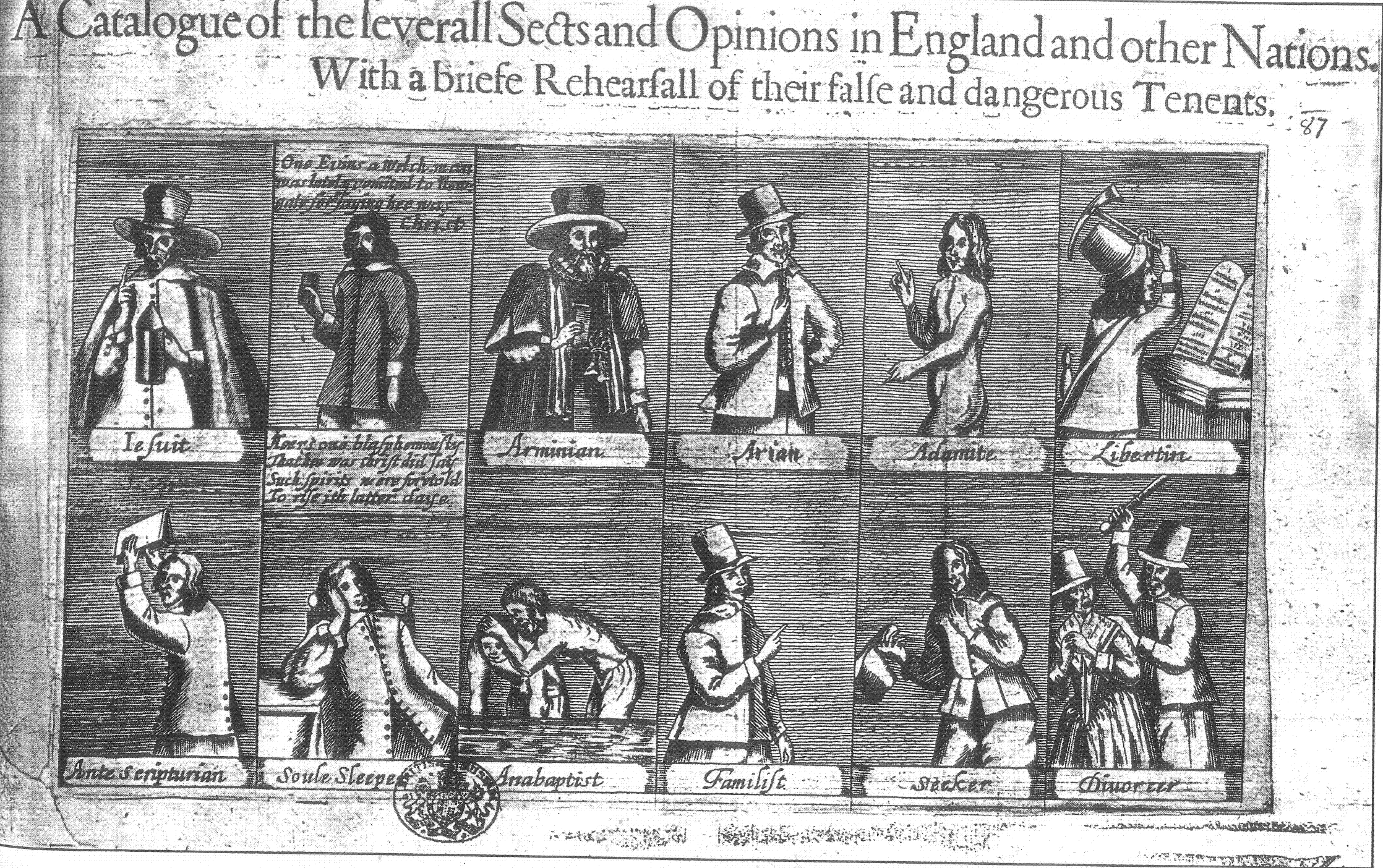
Are Quakers a cult?
 posted by Kathy
I've been moved to post on this subject by a couple of recent events. I noticed a story in the news which about a 15-year-old who was arrested and may be prosecuted for holding up a placard which labelled Scientology a cult. I thought it was probably rather unpleasant for the Scientologists to face a demonstration, but I didn't think a peaceful demonstration should be against the law. I wondered how we as Quakers would feel if there were a demonstration outside our Meeting. Surprised, perhaps - even pleased that anyone thought us worth the trouble.
Then there was a comment in response to one of Rhiannon's posts about Quaker Universalism on this blog. The comment didn't quite call her Satan's spawn, but it implied as much. As a theology student, Rhiannon entered into debate with gusto.
That's a problem with Quakers. Except in Meeting, we tend to talk a lot.
I'm not quite sure how to define a cult. Looking on the web, I find that some people define any religious group as a cult if it doesn't conform with certain beliefs of religious fundamentalism. I'm quite touched by the website of a guest-house in Minehead which describes Quakers as "A non-Christian cult, but nice people." Other websites are very suspicious of silent worship and waiting on the Spirit. They reckon that all truth can be found in the Bible.

Quakers certainly inspired fear and mistrust - as well as derision - in the 17th century when they emerged among the many dissenting groups in the atmosphere of religious seeking and debate that flourished briefly and refused to die away. From the outside, Quakers must seem strange. "What do you do in Meeting?" people ask. Mostly we sit in silence. Occasionally someone speaks, usually briefly. After their words, the silence returns. After Meeting, we sometimes discuss the words and sometimes the quality of the silence.
That doesn't get very far. The next question is often, "What do Quakers believe?" All sorts of things. We share a method. We're mostly pacifists and we care about Truth. I try to explain further but I can see the doubts. A creed would be so much easier. In desperation, I sometimes say We don't believe in Creeds, and immediately begin to wonder if there are Quakers who do - Quakers in dual membership, for instance.
So I start talking about Quaker testimonies ... and find that, although they are, for me, rooted in something which is distinctively Quaker, I can't explain the distinctly Quaker approach to simplicity, equality, truth, peace and social justice without sounding ... well ... weird.
To me, a cult is the sort of body which uses underhand techniques to persuade people to join, controls their minds, limits their freedom, takes their money and hardly ever lets them go. That understanding of what cults are comes mostly from scary programmes on television and articles in newspapers.
 Quakers aren't like that - or, at least, not the ones I've come across in more than thirty years of attending Meeting. When I decided I might like to join, I had to ask someone at my Meeting how I should go about it and whether it was difficult. It was a pretty slow process. I wrote a letter saying why I'd like to join, met a couple of Quakers who talked to me about it and then a business Meeting (which all local Quakers can attend) discussed my application and agreed. I was welcomed into membership. No-one asked me for money or suggested I should attend Meeting more often. There weren't special T-shirts or secret handshakes. It wasn't a big change - more like an acknowledgement of something I knew already: that I belonged among Quakers. And if one day I changed my mind, I could resign by writing another letter.
Of course, I do feel I have responsibilities to my Meeting and wider Quaker organisations. These change with what I can do. Sometimes all I can do is attend Meeting occasionally. Sometimes I've had particular roles in the local Meeting. I've organised a children's Meeting. Once - but only once - I accompanied seven teenagers to the big, week-long Yearly Meeting. Sometimes, when I can afford it and Meeting needs it, I give money. At the moment I am in charge of providing drinks and biscuits after Meeting, and I try to attend most Sundays. I blog.
And I try to listen to others, trying to bear in mind the words from the current edition of Advices and Queries: "Are you open to new light, from whatever source it might come?" (A&Q 7) That doesn't sound cultish to me.
What do you think?
Friday, 23 May 2008
Yearly Meeting - twitters and blogs

posted by k
Every year, Quakers in Britain have a sort of annual general meeting called, quite sensibly, "Yearly Meeting." It lasts for several days and all members are invited to attend. This weekend, Yearly Meeting is at Friends House in London and there may be as many as 1,000 Quakers there.
Decisions are reached by all the people present - by agreement of everyone and not by voting. It's a matter of listening to what other people say with openness - it might be expressed as waiting on the Spirit or in some other way.
So far as I know, only one person from Beeston Meeting will be attending - he's 16 and will be taking part in the Young People's programme.
I'll be following the BYM blog - if anything gets posted there. This year BYM will be twittering - see twitter.com/quakers.

Tuesday, 20 May 2008
Military celebrations

posted by Kathy
It sounds as though celebrating the military is to become a compulsory part of life. I've blogged about this, in a personal capacity, elsewhere but I paused before posting to a blog labelled "Quaker".
I haven't read the whole document yet as it's a large pdf file but I've seen a number of the proposals (which havthe e support of the government) which are widely reported in the press. There are, so far as I can see, three categories, although these sometimes overlap.
First there is a concern to make life easier for serving soldiers, particularly serving soldiers in uniform and those returning from war. It wouldn't be realistic to expect this concern to lead the government to disengage from war at once, disband the army and compensate ex-soldiers but I note that there's more interest in homecoming parades (which councils will be expected to organise) and discounts for serving soldiers in uniform in shops and at sporting events. It's disappointing that there's nothing to meet real concerns of soldiers about housing and health treatment - and nothing about the high level of homelessness and mental health problems among soldiers who have left the army. There's a provision which would make it a crime to discriminate against a soldier in uniform that I'll discuss later.
Then there are provisions to celebrate and glorify the army. Soldiers are to be more visible. Military parades, tattoos and so on will become a more frequent part of life and will be covered on television. There will be a new bank holiday (probably in June) to celebrate the armed services and veterans.)
Finally there are the provisions that will affect people's rights, especially the rights of children and anti-war activists. "Military awareness" will become part of the national curriculum and state schools will be encouraged to set up cadet corps for their pupils. No-one is talking about a right of conscientious objection from military awareness courses. Quakers and others may feel worried about the effect of this increased emphasis on the military in schools. It's bad enough already. In addition, we should watch out for the laws which make discrimination against serving soldiers a crime - and the laws which deal with abusing soldiers.
Obviously the first response of Quakers may be to say, "But we'd never do that." Nonetheless, laws are often used against peace protestors in surprising ways. I recall when Lindis Percy was accused of racial abuse for mistreating a United States flag. Will these laws be used against peace protestors. I've stood outside Chetwynd Barracks with other members of Beeston Quakers and anti-war protestors. I've handed out leaflets and spoken to soldiers through a megaphone. Would this be treated as discriminatory or abusive? We won't know until we see the law and how it is used.
The press has, on the whole, greeted the new proposals with enthusiasm and Gordon Brown has indicated that they will become law. These could be difficult days for peace-makers.

Saturday, 17 May 2008
Saying "no" to war

posted by kathy
A review in today's Guardian reminded me of the history of pacifist conscientious objection - and how difficult it was. One of the books discussed, We Will Not Fight by Will Ellsworth-Jones, looks at the case of Bert Brocklesby, whose two brothers were at the front. War was against Bert's Christian beliefs (he was a Methodist) but he wasn't granted conscietntious objector status. Instead he was shipped out to France and sentenced to death.
The review, by Francis Beckett, is full of telling quotations and anecdotes about the horrors of the First World War. It wasn't just a time of jingoistic patriotism but also period in which general conscription was first introduced. Most British Christians were war-mongers and the review quotes Archdeacon Basil Wilberforce, chaplain to the Speaker of the House of Commons, preaching that:
"To kill Germans is a divine service in the fullest acceptance of the word."
It's hard to stand out against trends in the way that Bert Brocklesby and others did. In the twentieth century, Quaker pacifists probably had an easier time than most because they had the support of their Meetings. There was a whole organisation supporting them. They might be sent to prison but I've heard accounts of Quaker Meetings in prison in wartime. Conscientious objectors acting alone and without the support of their churches - like the Austrian Catholic anti-Nazi Franz Jagerstatter - had a much harder time. Bert Brocklesby, who eventually survived, was neglected and condemned by army chaplains:
"Under sentence of death in Boulogne, in a filthy cell, Brocklesby was visited by a chaplain, who held his nose against the smell. "What is your religion?" asked the chaplain. "I'm a Methodist." "Oh, I'm sorry, I can't help you - I'm Church of England." Worse was the chaplain who visited Brocklesby after his reprieve and called him "a disgrace to humanity"."
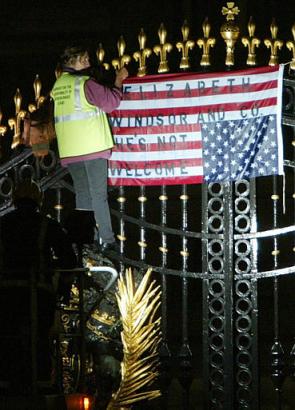 Today it's pretty well accepted that Quakers are conscientious objectors. But Quakers are also involved, more controversially, in direct action: in the campaign against the U.S. spy base at Menwith Hill, for instance; in protesting against arms fairs and the arms trade; opposing extraordinary rendition, torture and the theft of Diego Garcia from the Chagos Islanders. Meeting for Sufferings (the central administrative committee of the Society of Friends) may be concerned with such bureaucratic tasks and the central framework of the society, but it also considers questions which may be unpopular today - such as the need asylum seekers have for friendship, care and support. And from time to time, Meeting for Sufferings still records the arrest and imprisonment of Friends.
It's good to remember how people have suffered for their beliefs in the past and to acknowledge how much we have built on the work of people who stood against attutudes, policies and laws which most people now agree were wrong. But that's not enough. George Fox's question "What canst thou say?" still has force. Perhaps we should also ask ourselves, "What canst thou DO?"
Note: The Housmans website has a good list of books on Pacifism and Non-Violence.
Subscribe to:
Posts (Atom)